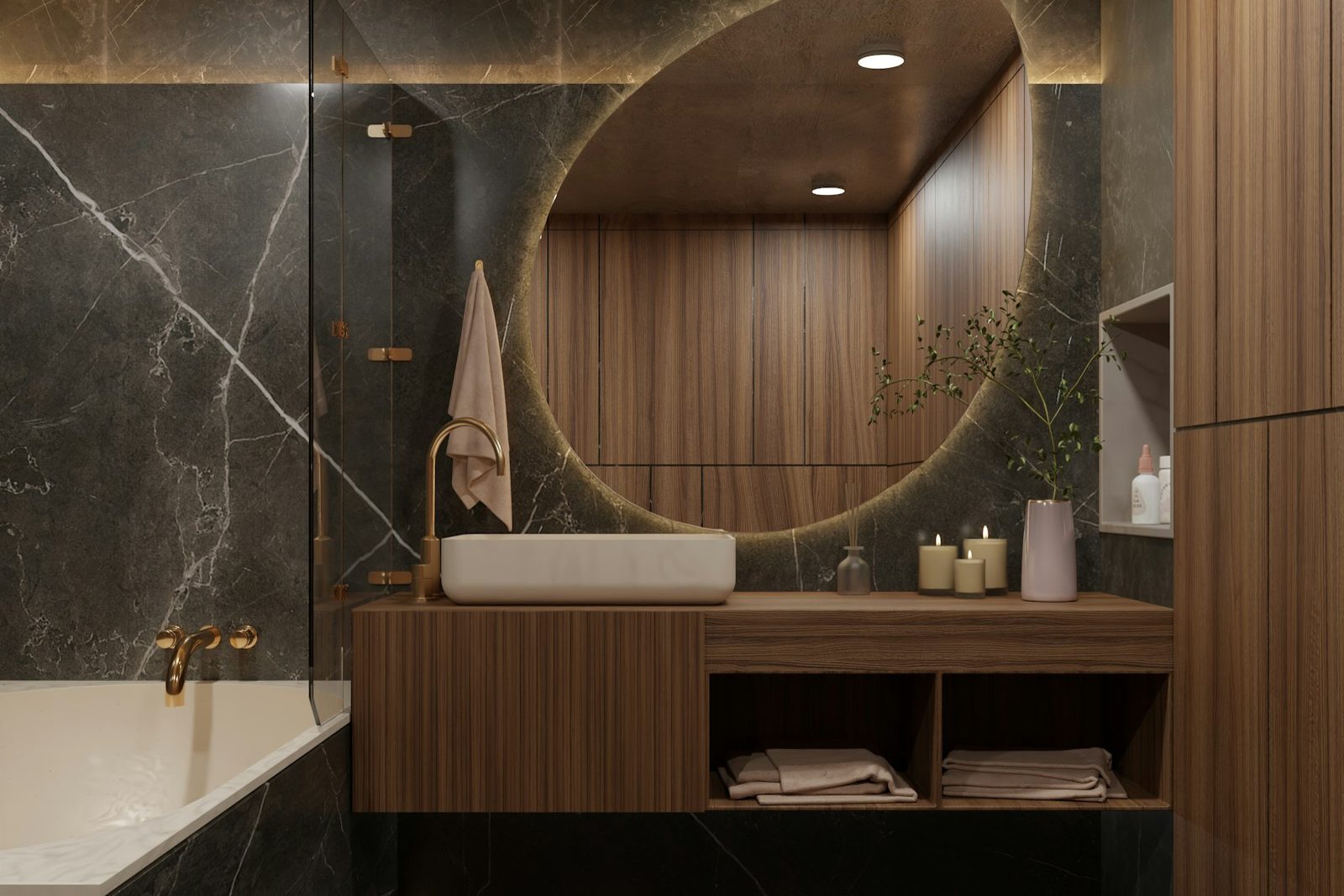
The appeal of natural stone
Natural stone brings a depth, warmth and individuality to a bathroom that few other materials can match. No two pieces are identical. Veining, colour shifts and textures make every stone bathroom unique. Marble feels luxurious, travertine and limestone feel soft and Mediterranean, slate feels earthy and granite feels robust. In Drouin’s farmhouses, character homes and new builds alike, natural stone is a popular choice for vanity tops, feature walls, floors and freestanding baths.
Stone also has particular needs. It is porous, reacts to some chemicals, can be slippery when polished and needs sealing and care. This guide explains the common stones used in bathrooms, how they perform and how to decide whether natural stone or a stone-look alternative suits your household.
Common natural stones
Marble
Marble is a metamorphic stone formed from limestone, prized for its veining and luminous surface. Popular varieties include white marbles with grey veining, creamy marbles and dramatic dark marbles with bold white veins.
Strengths: beautiful, timeless, cool underfoot, available in many finishes.
Considerations: marble is relatively soft and sensitive to acids. Products containing acids, including some cleaners, toiletries and even citrus, can etch the surface, leaving dull marks. Marble can also stain if not sealed. Polished marble is slippery when wet, so honed or textured finishes suit floors better.
Travertine
Travertine is a form of limestone with natural pores and holes, usually filled during manufacture. It has warm creamy, beige and walnut tones.
Strengths: warm, natural, textured look; suits Mediterranean, rustic and organic styles.
Considerations: filled pores can open over time; sensitive to acids; requires sealing.
Limestone
Limestone is a sedimentary stone with soft, even colouring, often in creams, greys and pale blues.
Strengths: calm, understated beauty; suits minimalist and natural styles.
Considerations: softer and more porous than many stones, sensitive to acids and staining, needs regular sealing.
Granite
Granite is an igneous stone, very hard and dense, with speckled patterns.
Strengths: highly durable, resistant to scratches and heat, less porous than many stones.
Considerations: the speckled look suits some styles more than others; still benefits from sealing.
Slate
Slate is a fine-grained metamorphic stone in greys, greens, blacks and rust tones, with a natural cleft texture.
Strengths: natural slip resistance, rustic charm, durable.
Considerations: surface may flake if poor quality; needs sealing; texture can hold soap residue.
Quartzite
Quartzite is a hard metamorphic stone that often resembles marble but is more durable.
Strengths: marble-like looks with better resistance to etching and scratching.
Considerations: some products sold as quartzite are actually softer stones, so buy from reputable suppliers.
Onyx
Onyx is a translucent stone with dramatic banding, often used for backlit features.
Strengths: spectacular as a feature.
Considerations: soft and fragile; best for low-traffic decorative uses.
Where to use stone in a bathroom
Vanity tops
Stone vanity tops are popular and practical when sealed and cared for. Granite and quartzite suit busy family bathrooms. Marble suits households willing to accept a patina of etching over time.
Feature walls
A stone feature wall behind a vanity or bath, or inside a shower, creates a focal point. Large slabs with continuous veining create a dramatic effect.
Floors
Stone floors look beautiful but must be chosen for slip resistance. Honed, tumbled, brushed or flamed finishes provide better grip than polished surfaces. In wet areas, slip resistance ratings should be checked.
Shower floors and walls
Stone can be used in showers with suitable finishes, sealing and maintenance. Constant moisture, soap and hard water make showers the most demanding location for stone.
Freestanding baths and basins
Baths and basins carved from solid stone or made from stone composite are striking centrepieces. Solid stone baths are extremely heavy and need structural assessment, particularly on timber floors.
Stone-look porcelain
Porcelain tiles printed to replicate marble, travertine, limestone and other stones have improved enormously. Large-format porcelain slabs with realistic veining can cover walls and vanities with few joints.
Strengths: non-porous, resistant to stains and etching, no sealing needed, consistent, available in many slip ratings.
Considerations: patterns repeat across tiles, and the material lacks the depth and individuality of natural stone.
Many households choose stone-look porcelain for floors and shower walls and real stone for a vanity top or feature, combining practicality and beauty.
Engineered stone
Engineered stone has been widely used for benchtops in the past. Victoria and the rest of Australia banned the manufacture, supply, processing and installation of engineered stone benchtops, panels and slabs from 1 July 2024, due to health risks for workers cutting it. Alternatives include natural stone, porcelain slabs, solid surface materials and compact laminates.
Sealing
Most natural stones are porous and benefit from sealing with a penetrating sealer, which reduces absorption of water, oils and stains without changing the look. Sealing does not prevent etching from acids. How often stone needs resealing depends on the stone, its location and use, typically every one to three years in bathrooms. A simple water test shows when resealing is due: if water darkens the stone quickly, it is time to reseal.
Installation considerations
Substrate and waterproofing
Stone tiles are installed over a waterproof membrane, applied to AS 3740, like any other tile. Some stones are sensitive to moisture coming from the adhesive bed, which can cause staining or warping, so suitable adhesives must be used.
Weight
Natural stone is heavy. Large slabs and solid stone baths require adequate support. In homes on stumps around Drouin, Jindivick and Drouin South, the floor structure must be assessed and possibly reinforced.
Adhesives
White or light-coloured stones need white adhesives to avoid shadowing. Some stones need rapid-setting adhesives to limit moisture absorption.
Movement joints
Stone floors and walls need movement joints, just like tiles, filled with flexible sealant in a matching colour.
Care and cleaning
- Use pH-neutral cleaners designed for stone.
- Avoid acidic cleaners, vinegar, bleach and abrasive products.
- Wipe up spills, particularly cosmetics, oils and coloured products, promptly.
- Squeegee shower walls after use.
- Reseal as needed.
- Use trays for toiletries on vanity tops to reduce staining and etching.
Tank and bore water
Rainwater from tanks is generally kind to stone. Bore water can contain iron and minerals that stain stone orange or leave scale. If your property uses bore water, consider filtration, choose darker or patterned stone that hides marks or use stone-look porcelain in showers.
Slip resistance
Wet stone can be slippery. For floors and showers, check slip resistance ratings and choose textured finishes. In family homes and bathrooms used by older people, slip resistance should take priority over shine.
Choosing the right stone
Ask yourself:
- Will I enjoy a patina, or do I want the surface to stay unchanged?
- How much maintenance am I happy to do?
- Who uses the bathroom, and how heavily?
- Is the floor structure strong enough?
- What is the water supply?
For many households, a combination works best: stone-look porcelain for floors and showers, and natural stone where it can be enjoyed and easily maintained.
Finishes explained
Polished
A polished finish is glossy and reflective, intensifying colour and veining. It shows etching more readily and is slippery when wet, so polished stone suits vanity tops and walls rather than floors.
Honed
Honing produces a smooth, matte or satin surface. Honed stone hides etching better than polished stone and is more suitable for floors, though slip resistance still needs checking.
Tumbled
Tumbled stone has softened edges and a weathered, aged look. It suits rustic and Mediterranean styles and offers better grip.
Brushed
Brushing creates a gently textured, leathery surface that is pleasant underfoot and provides good slip resistance.
Flamed and bush-hammered
These finishes create a rough texture with high slip resistance, mainly used on hard stones such as granite for floors and outdoor areas.
Living with patina
Natural stone changes over time. Marble and limestone in particular develop a patina from use: small etches, softening of polish and subtle changes in colour. Some households love this, seeing it as character, much like the patina on old timber or brass. Others find it frustrating. Being honest with yourself about which camp you are in is one of the most useful steps in choosing stone. If you want a surface that looks the same in ten years as it does on day one, choose granite, quartzite or porcelain.
Grout and stone
Grout choice matters with stone. Narrow grout joints suit calibrated stone tiles. Colour should complement the stone rather than contrast strongly, unless a pattern effect is intended. Some grouts contain pigments that can stain light, porous stones, so stone should be sealed before grouting where the manufacturer recommends it. Epoxy grouts provide excellent stain resistance in showers but must be compatible with the stone and applied with care to avoid haze.
Combining stone with other materials
Stone pairs beautifully with timber vanities, brushed brass or nickel tapware, matte black fittings and soft lime-washed walls. A single stone feature, such as a marble vanity top or a travertine bath surround, can lift a bathroom otherwise finished in practical porcelain. Repeating the stone in a small element elsewhere, like a soap ledge or shelf, ties the design together.
Our approach
At a design consultation, we discuss how you want the bathroom to feel and how it will be used, then help you choose between natural stone and stone-look alternatives. We assess floor structure for heavy stone, select compatible adhesives and sealers, waterproof to AS 3740 and install stone with care to protect its surface and edges. We also provide care instructions at handover so your stone looks beautiful for years.
Repairing chips and etches
Natural stone can often be repaired. Small chips can be filled with colour-matched resin, and light etching on marble can be honed and repolished by a stone specialist. Deeper damage may require replacing a tile, so keep a few spare pieces from the same batch after installation.
Lighting stone well
Lighting changes how stone looks. Grazing light from a wall washer or LED strip highlights texture in travertine and slate, while soft, even light shows marble veining at its best. View samples under the light you plan to use, because stone that looks warm in a showroom can appear cooler at home.
Viewing and selecting stone
Natural stone varies from slab to slab, so view the actual slabs or a representative batch before committing. Ask the supplier about the stone’s origin, porosity, finish options and recommended sealers. Request a sample to test at home with your toiletries, water and cleaning products. Keep the sample to compare with the delivered material.
Our bathroom services
- Accessible Bathrooms
- Bathroom Design
- Bathroom Renovations
- Bathroom Tiling
- Ensuite Renovations
- Freestanding Baths
- Laundry Renovations
- Leaking Shower Repairs
- Shower Conversions
- Small Bathroom Renovations
- Vanities and Storage
- Waterproofing
Book a design consultation
Tell us about your bathroom and we will visit to measure, talk through ideas and prepare a clear written scope for your home.
Book a design consultation