Why bathroom lighting deserves a plan
Lighting is often treated as an afterthought in a bathroom renovation, settled with a single ceiling light in the middle of the room. Yet a bathroom is used for tasks that demand good light, such as shaving, applying makeup, checking skin and cleaning, as well as for relaxing in the bath at the end of a long day. In Drouin and across West Gippsland, winter mornings are dark and grey, and many people use the bathroom before sunrise and after sunset for half the year. A well-planned lighting scheme makes the room safer, more practical and more beautiful.
This guide explains how to layer bathroom lighting, how electrical zones work in wet areas, how to choose colour temperature and fittings and how to bring in natural light.
The four layers of light
Professional lighting designers think in layers. Each layer has a different job, and together they create a room that works at any time of day.
Ambient lighting
Ambient light is the general illumination that fills the room. It is usually provided by ceiling fittings: downlights, a surface-mounted fitting or a pendant where permitted. The goal is even light without harsh shadows. In a small bathroom, one well-chosen fitting may be enough. In a larger room, several downlights spread evenly across the ceiling work better.
Task lighting
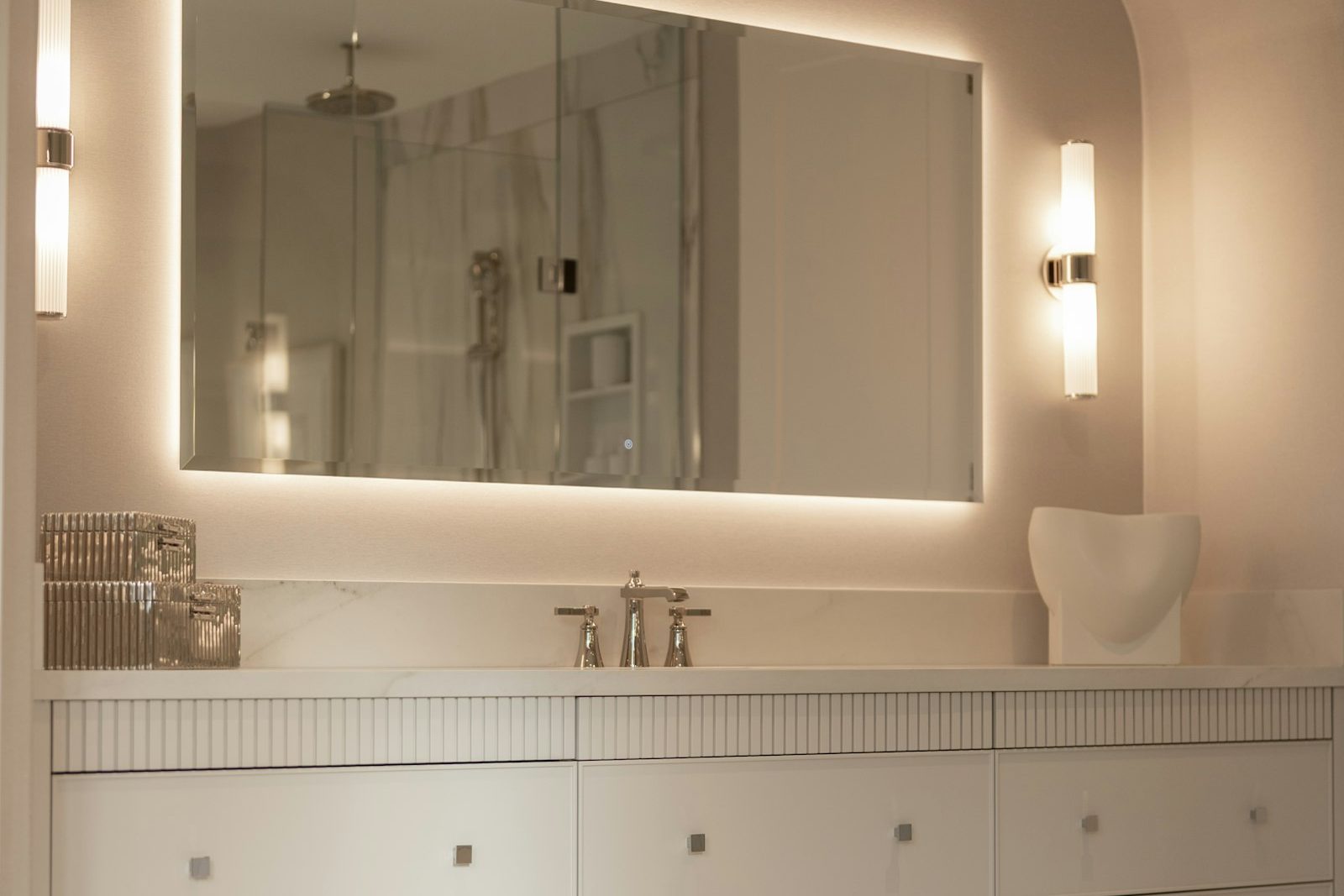
Task lighting is focused light for specific activities, most importantly at the mirror. Light from directly overhead casts shadows under the eyes, nose and chin, which is unhelpful for shaving or makeup. The best task lighting comes from the sides of the face, at roughly eye height, or from a backlit or front-lit mirror. Wall lights either side of the mirror, vertical LED strips or a mirror with integrated lighting all provide even, flattering light.
Accent lighting
Accent lighting highlights features and creates depth. LED strips in shower niches, beneath a floating vanity, behind a mirror or along a bath hob make the room feel layered and premium. Accent lighting also helps a bathroom feel larger by washing walls with light.
Night lighting
A soft, low-level light makes night-time trips to the bathroom easier without waking anyone fully. LED strips under the vanity or a low-wattage step light near the floor, ideally on a sensor, provide enough light to move safely. This is especially valuable for children and older people.
Understanding electrical zones
Bathrooms are wet areas, and electrical installations within them must follow Australian wiring rules. The room is divided into zones based on distance from the bath and shower. Fittings within certain zones must have appropriate ingress protection ratings, and some types of fittings and switches cannot be installed close to water at all. Power points must be positioned at specified distances from baths, showers and basins. All electrical work must be carried out by a licensed electrician, who will determine compliant positions and fittings for your room.
IP ratings
An IP rating describes how well a fitting resists dust and water. The second number refers to water. Fittings within the shower area need higher ratings than those elsewhere in the room. When choosing downlights, LED strips or wall lights, check their IP ratings with your electrician.
Colour temperature and colour rendering
Colour temperature
Colour temperature, measured in kelvin, describes whether light looks warm or cool.
- 2700K to 3000K: warm white, cosy and relaxing, similar to traditional incandescent globes.
- 4000K: neutral or natural white, crisp and clear, good for tasks.
- 5000K and above: cool white or daylight, very bright and clinical.
Many bathrooms use 3000K for ambient and accent lighting and 4000K for mirror task lighting, or a single 3000K to 4000K scheme throughout. Some fittings allow you to switch colour temperature, offering flexibility.
Colour rendering index
The colour rendering index, or CRI, measures how accurately light shows colours. A CRI above 90 is recommended at the mirror, so skin tones and makeup look natural.
Dimming and controls
Dimmable lighting allows the bathroom to switch from bright and functional to soft and relaxing. Separate switching for each layer gives the most control: ambient on one switch, mirror lighting on another, accent and night lighting on others. Motion sensors are practical for night lights and in powder rooms. Smart controls can schedule lighting scenes, though simple switches suit many households.
Mirror lighting options
Backlit mirrors
LED strips behind the mirror create a halo glow on the wall. This looks dramatic and provides some task light, though usually not enough on its own for detailed work.
Front-lit mirrors
Mirrors with LEDs behind frosted bands on the glass provide even, shadow-free light across the face. Many include demisters that keep the glass clear after a hot shower.
Shaving cabinets with lighting
Mirrored cabinets with integrated lighting combine storage and task lighting, ideal for smaller bathrooms.
Wall sconces
Wall lights either side of the mirror at eye height offer excellent task light and a decorative touch.
Lighting the shower
Showers often sit in the darkest part of the room, especially when enclosed by glass on two sides or set at the end of a long bathroom. A suitably rated downlight within the shower zone, or LED strip lighting in a niche, makes the shower brighter and safer. Lighting a niche also highlights tile textures beautifully.
Natural light
Windows
Windows provide daylight and ventilation, but they need privacy. Frosted, fluted or tinted glass, high windows or sheer blinds balance light and privacy. Windows in or near showers need suitable glass and frames that resist moisture.
Skylights
A skylight or tubular skylight can flood a bathroom with daylight, particularly in internal rooms or where tall trees shade windows, as in many homes around Labertouche and Jindivick. Choose insulated, double-glazed skylights to reduce heat loss in winter, and ensure flashing and sealing are done correctly to prevent leaks.
Light-reflecting finishes
Pale wall tiles, gloss or satin finishes and large mirrors bounce light around the room. Dark tiles create mood but need stronger artificial lighting.
Lighting for small bathrooms
In small bathrooms, lighting can make the room feel larger. Washing walls with light, using a backlit mirror, lighting beneath a floating vanity and choosing pale finishes all help. Avoid a single central light, which can make a small room feel flat.
Lighting for ageing in place
As we age, our eyes need more light and are more sensitive to glare. Good bathroom lighting for older users includes:
- Higher overall light levels
- Even light without strong shadows
- Glare-free fittings
- Night lighting on a sensor
- Illuminated switches that are easy to find
- Contrasting colours to define edges
Heating lamps and combination units
Some households like heat lamps in a combined light, fan and heater unit. These provide quick warmth on cold mornings. Combination units should be correctly sized for the room and ducted to the outside. Many people now prefer separate in-floor heating and heated towel rails, with dedicated lighting and exhaust fans, for better performance and a cleaner ceiling.
Planning lighting during a renovation
Lighting positions must be decided before the walls and ceiling are closed in. At the rough-in stage, the electrician installs wiring for every fitting, switch and sensor. Changing positions after tiling is difficult and may damage waterproofing or finishes.
Bring a list of the lighting you want to your design consultation:
- How many ceiling lights and where
- Mirror lighting type
- Niche and accent lighting
- Night lighting
- Switching and dimming
- Skylight or window changes
Energy efficiency
LED lighting uses very little energy and lasts many years, making it ideal for bathrooms. Choose quality fittings with good heat management, because poorly made LEDs can fail early or shift colour. Pair lighting with an exhaust fan on a timer or humidity sensor to manage energy and moisture together.
Lighting by bathroom style
Classic and farmhouse
Wall sconces with fabric or glass shades, a simple flush ceiling fitting and warm 2700K light suit weatherboard homes and farmhouses around Drouin South and Buln Buln. Brushed brass or black fittings tie in with tapware.
Contemporary
Recessed trimless downlights, backlit mirrors and concealed LED strips create a clean, minimal look in newer homes in Drouin’s estates.
Natural and organic
Rattan or timber pendants outside wet zones, warm accent strips under timber-look vanities and soft wall-washing light suit bathrooms with stone and natural textures.
Laundries and powder rooms
Laundries need bright, even task light over benches and tubs, ideally 4000K for checking stains and colours. Powder rooms are a chance for drama: a statement pendant or wall light, a backlit mirror and a dark, moody tile can turn a small room into a memorable space for guests.
Our approach
At a design consultation, we look at how your bathroom is used across the day and through Drouin’s long winters, then propose a lighting plan that layers ambient, task, accent and night lighting. We coordinate with a licensed electrician to ensure every fitting is suitable for its zone and installed correctly, and we confirm positions at rough-in so the finished room looks and works exactly as planned.
Common lighting mistakes
- Relying on one central ceiling light
- Placing downlights directly above the mirror, creating shadows on the face
- Choosing cool, harsh light for the whole room
- Forgetting lighting in the shower or niches
- No night lighting
- Fittings with inadequate IP ratings for their zone
- Leaving lighting decisions until after the walls are lined
Lighting and safety
Bathroom electrical work must be carried out by a licensed electrician, and light fittings near the shower and bath must be suited to the wet-area zone they sit in. Look for appropriate IP ratings on fittings, and avoid placing switches where wet hands will reach them first. A low-level, motion-activated light is a simple way to help children and older family members find their way at night without switching on bright overheads. Dimmers on ambient lighting also make it easier for eyes to adjust in the early morning.
Choosing colour temperature
Warm white light around 3000K flatters skin tones and feels relaxing, while neutral white around 4000K shows makeup and grooming detail more accurately. Many households use neutral white at the mirror and warm white for ambient lighting, keeping the whole room consistent within each layer.
Bringing it together
A bathroom with layered lighting feels completely different from one lit by a single globe. On a dark winter morning in Drouin, bright, even mirror light helps you get ready quickly. In the evening, dimmed ambient light and a softly glowing niche turn the same room into a retreat. Planning these layers from the start takes little extra effort and transforms how the room feels every day.
Our bathroom services
- Accessible Bathrooms
- Bathroom Design
- Bathroom Renovations
- Bathroom Tiling
- Ensuite Renovations
- Freestanding Baths
- Laundry Renovations
- Leaking Shower Repairs
- Shower Conversions
- Small Bathroom Renovations
- Vanities and Storage
- Waterproofing
Book a design consultation
Tell us about your bathroom and we will visit to measure, talk through ideas and prepare a clear written scope for your home.
Book a design consultation